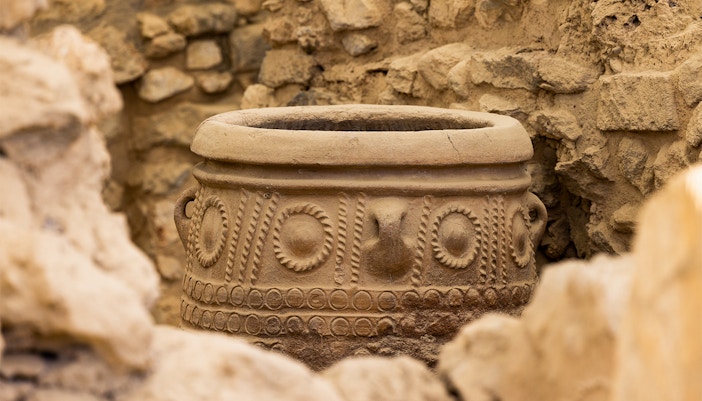
The Knossos Palace, dating back to around 1900 BCE, was the core of Minoan society. The complex was a central hub for administration, religious rituals, and community gatherings, its walls bearing silent testimony to shifting power dynamics and changing social institutions.
Uncover the history of Knossos | Minoan art & architecture
Knossos through the ages | Celebrating Minoan heritage
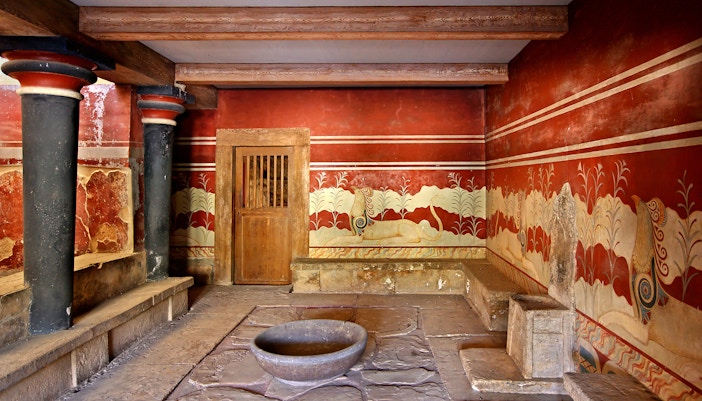
Heart of the Minoan civilization
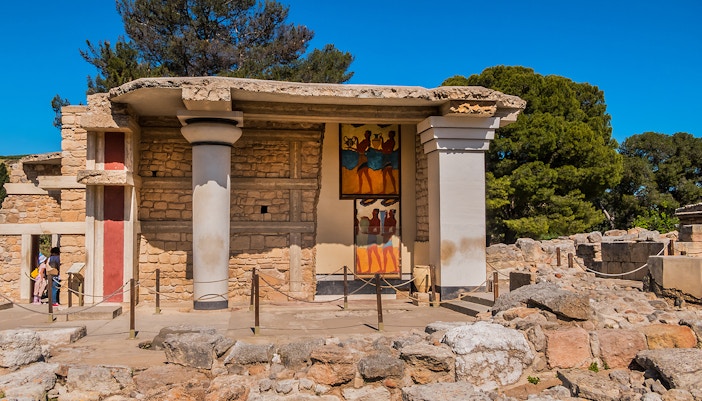
Advanced architectural innovations
Featuring multi-story buildings, advanced drainage systems, and labyrinthine corridors, the Minoan complex reflects their impressive understanding of engineering and urban planning. Each room and courtyard had a purpose, from ceremonial spaces with raised platforms to storage rooms filled with jars of olive oil, wine, and grains, essential for the Minoan trade.
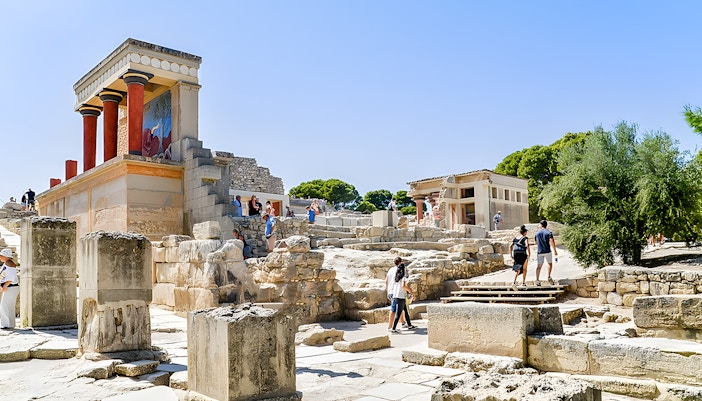
Cultural significance
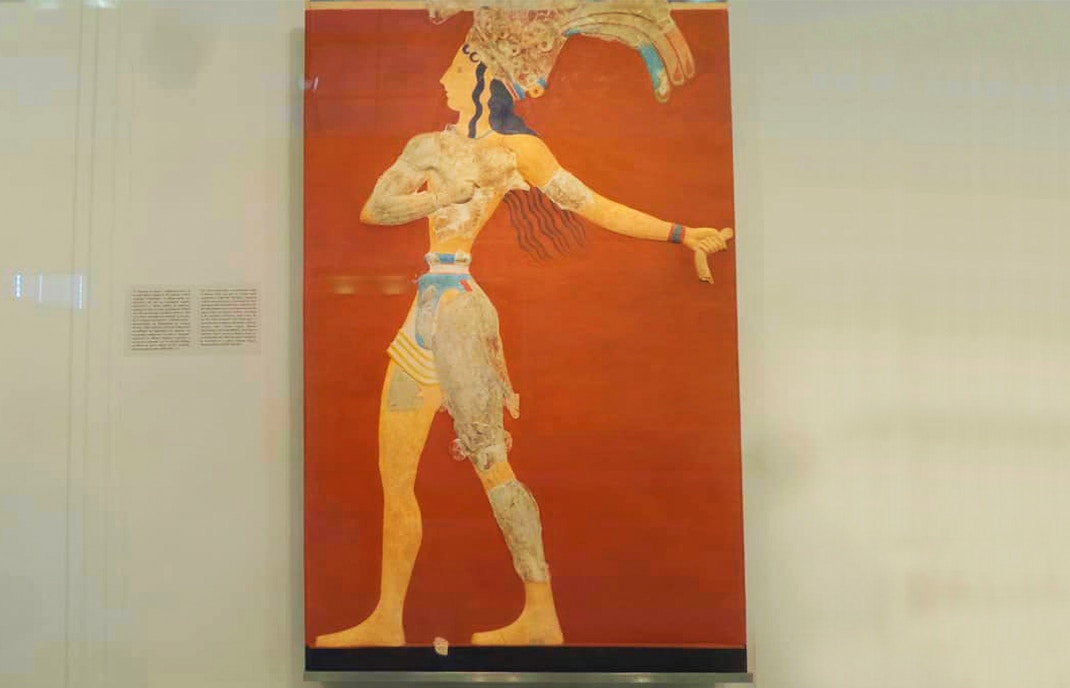
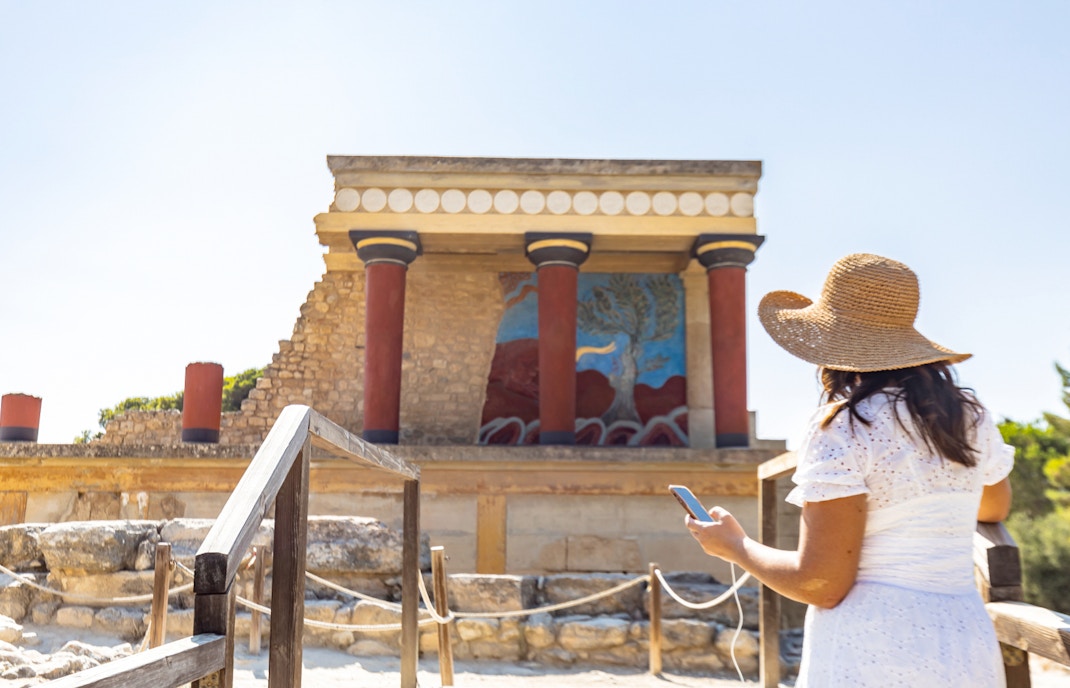
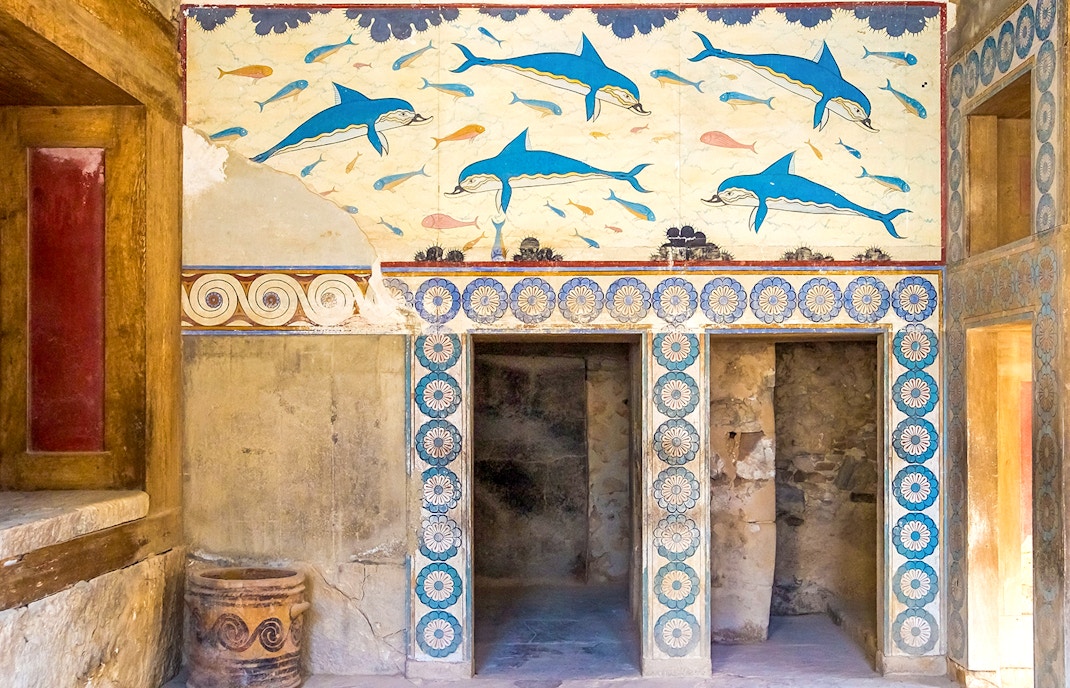
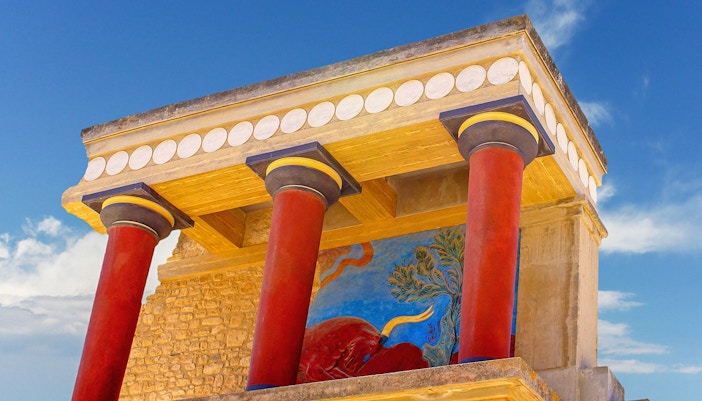
The palace walls feature numerous frescoes and murals, depicting religious rituals, nature, and everyday Minoan life. These paintings reveal the deep connection the ancient Minoans had with their environment and religious beliefs. Consequently, the Knossos cultural hotspot went on to inspire the Greek and Roman civilizations, leaving an indelible mark on history.
Timeline of the Knossos Palace
- 7000 BCE: Small communities begin establishing themselves in an area, which would later be known as the Knossos Palace and become one of the longest-inhabited sites in the world.
- 1900 BCE: The First Palace is constructed, marking the beginning of Knossos as a major cultural and administrative center for the Minoan civilization.
- 1700 BCE: A natural disaster, possibly an earthquake, damages the palace. A new and more elaborate palace is constructed, featuring advanced drainage systems, colorful frescoes, and expanded storage areas.
- 1450 BCE: Mycenean Greeks take control of the Palace of Knossos, integrating it into their expanding cultural sphere. They maintain the palace's administrative functions, bring in new influences, and start the use of Linear B tablets.
- 1375 BCE: The palace is destroyed by fire, no longer to be used as an administrative center. The site slowly disintegrates over time.
A detailed glimpse into the history of Knossos
Early-settlement and Pre-Palatial period (Neolithic to early Minoan period)
Circa 7000 to 1900 BCE
- Neolithic beginnings: The archaeological site of Knossos was first inhabited around 7000 BC. The early settlers lived in simple mud-brick houses and gradually developed into a thriving community. Its proximity to the fertile lands and the sea facilitated its growth as a central hub in Crete.
- Pre-Palatial period: Around this time, the people of Knossos began shaping a distinct culture. They relied on farming, hunting, and gathering and developed complex burial rituals. Over time, the community sourced tools, produced fine pottery pieces, and fostered trade connections with nearby regions.
The First Palace period (Protopalatial period)
Circa 1900 to 1700 BCE
- Minoan society at its peak: Around 1900 BC, the first large palace was built at Knossos. This complex, multi-story structure, made of stone and wood, featured advanced drainage systems, storage facilities, workshops, and living quarters. The Minoans excelled in art and administration and established the First Palace as a ceremonial center.
- Deconstruction and reconstruction: Around 1700 BC, the first palace was destroyed, likely due to an earthquake or another natural disaster. The Minoans quickly rebuilt the palace on an even grander scale, marking the beginning of the Second Palace period.
The Second Palace period (Neopalatial period)
Circa 1700 to 1450 BCE
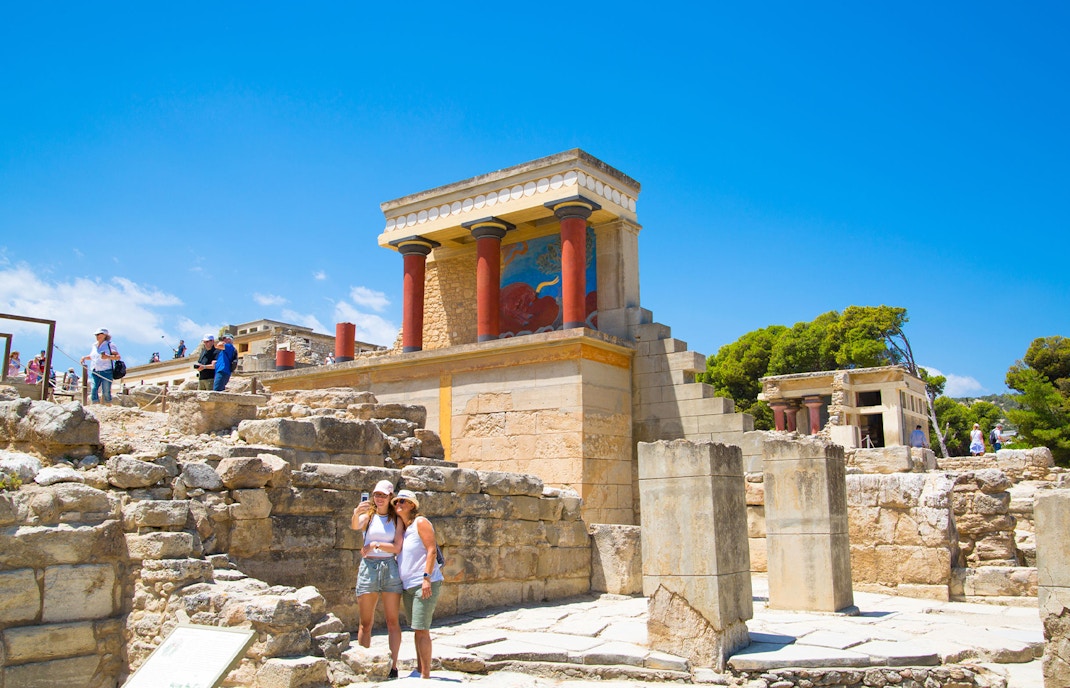
- Rebuilding and expansion: The Second Palace was even more elaborate and larger than its predecessor, covering an area of about 20,000 square meters and featuring numerous rooms, corridors, and courtyards.
- Architectural additions: The Palace was built around a central courtyard and every one of its rooms was repurposed to function as royal quarters, storerooms, and religious sanctuaries. The Minoans deployed advanced engineering techniques to facilitate water supply, drainage systems, and possibly even flushing toilets.
The decline and final destruction (Post-palatial period)
Circa 1450 to 1100 BCE
- Minoan decline: Around this time, the Minoan civilization experienced a sudden decline. The reasons for this are still debated among historians, with theories ranging from natural disasters such as the eruption of the Thera volcano to invasions by the Mycenaeans from mainland Greece.
- Mycenean occupation: The Myceneans occupied Knossos soon after and used the palace as an administrative center, but it never regained its former glory. The palace was finally destroyed around 1375 BC, most likely due to a fire, earthquake, or further invasions.
Post-Minoan history and rediscovery
- Post-Minoan period: After its destruction, Knossos was abandoned and eventually fell into ruin. The site remained largely forgotten for centuries, though it was still known to locals and mentioned in ancient texts. Classical Greek writers such as Homer and later Pausanias mentioned it in relation to the legend of King Minos, the Minotaur, and the Labyrinth.
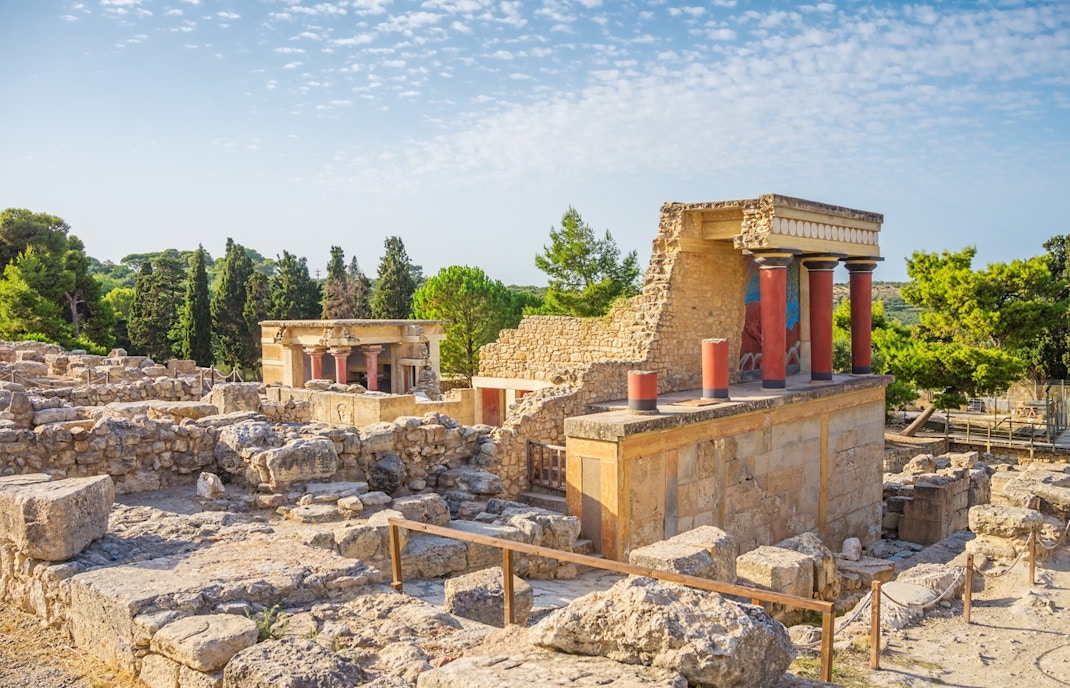
- Rediscovery and excavation: British archaeologist Sir Arthur Evans began systematic excavations in 1900, uncovering palace ruins and drawing worldwide attention to the grandeur of the Minoan civilization. He also controversially restored parts of the palace using reinforced concrete, which has been both praised for its preservation efforts and criticized for its historical inaccuracy.
The legacy of Knossos
- Cultural impact: The Palace of Knossos has had a profound impact on our understanding of ancient civilizations. It provided invaluable insights into the Minoan way of life, their art, religion, and administrative practices.
- Tourism and preservation: Today, Knossos ranks among the most visited archaeological sites in Greece, drawing tourists from around the world. Scholars have dedicated themselves to preservation efforts, ensuring the legacy of the Minoans continues to inspire and educate future generations.
Knossos Palace architecture
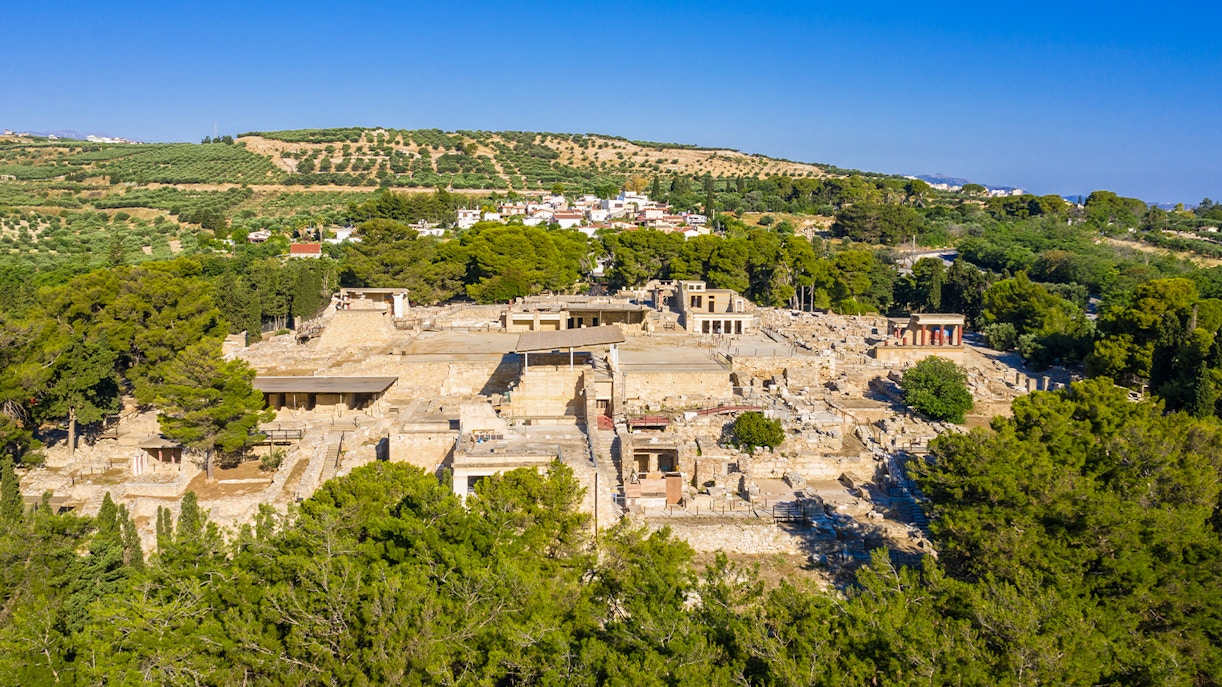
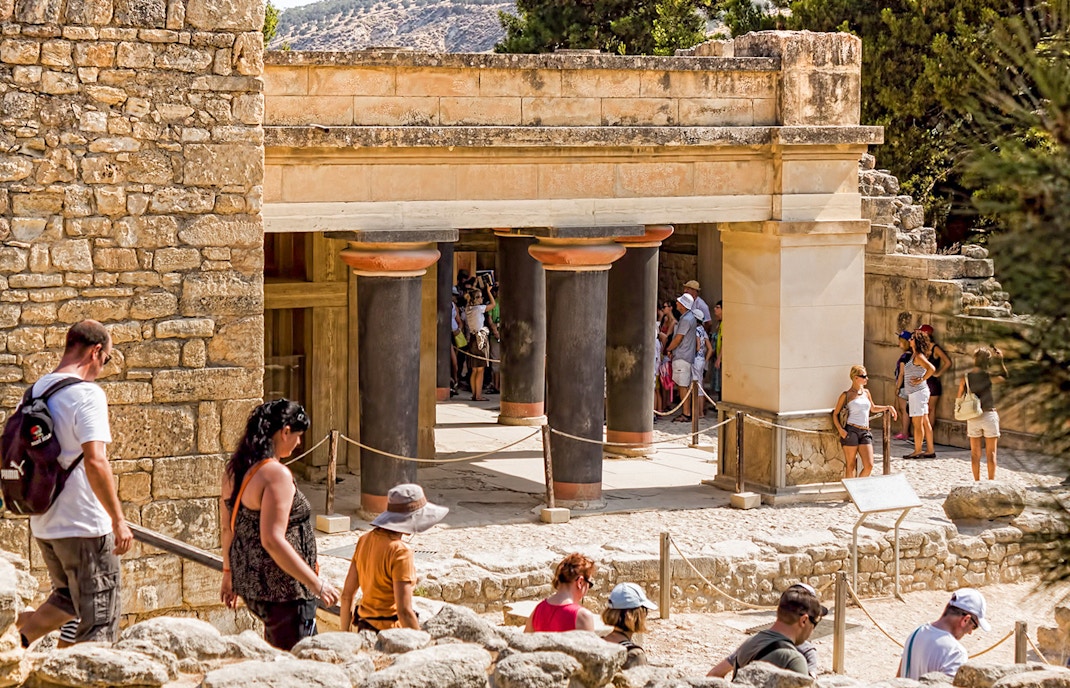
- Multi-story structure: The multi-story buildings of Knossos were connected by grand staircases and reinforced with wooden beams embedded within the walls. This architectural technique helped absorb seismic shocks, a vital adaptation for the earthquake-prone region, and reflects their advanced understanding of structural stability.
- Labyrinthine layout: The palace’s layout was a maze-like network of rooms, corridors, and courtyards arranged in a complex, non-linear pattern. This intricate design likely inspired the myth of the labyrinth, giving it the legendary moniker, the Palace of King Minos.
- Advanced drainage systems: The palace was constructed with an elaborate system of clay pipes and channels that supplied fresh water and efficiently managed wastewater, a unique and rare feature in ancient Greek architecture. Knossos also had open shafts that allowed natural light and fresh air to reach deep within the structure.
- Decorative elements: Knossos was richly adorned with frescoes, sculptures, and symbolic motifs, such as the ‘Horns of Consecration’, a key symbol of Minoan religious beliefs. These decorative elements were seamlessly integrated into the architecture to showcase Minoan beliefs and rituals.
Legend of Theseus and the Minotaur
1/5
The curse of Minos
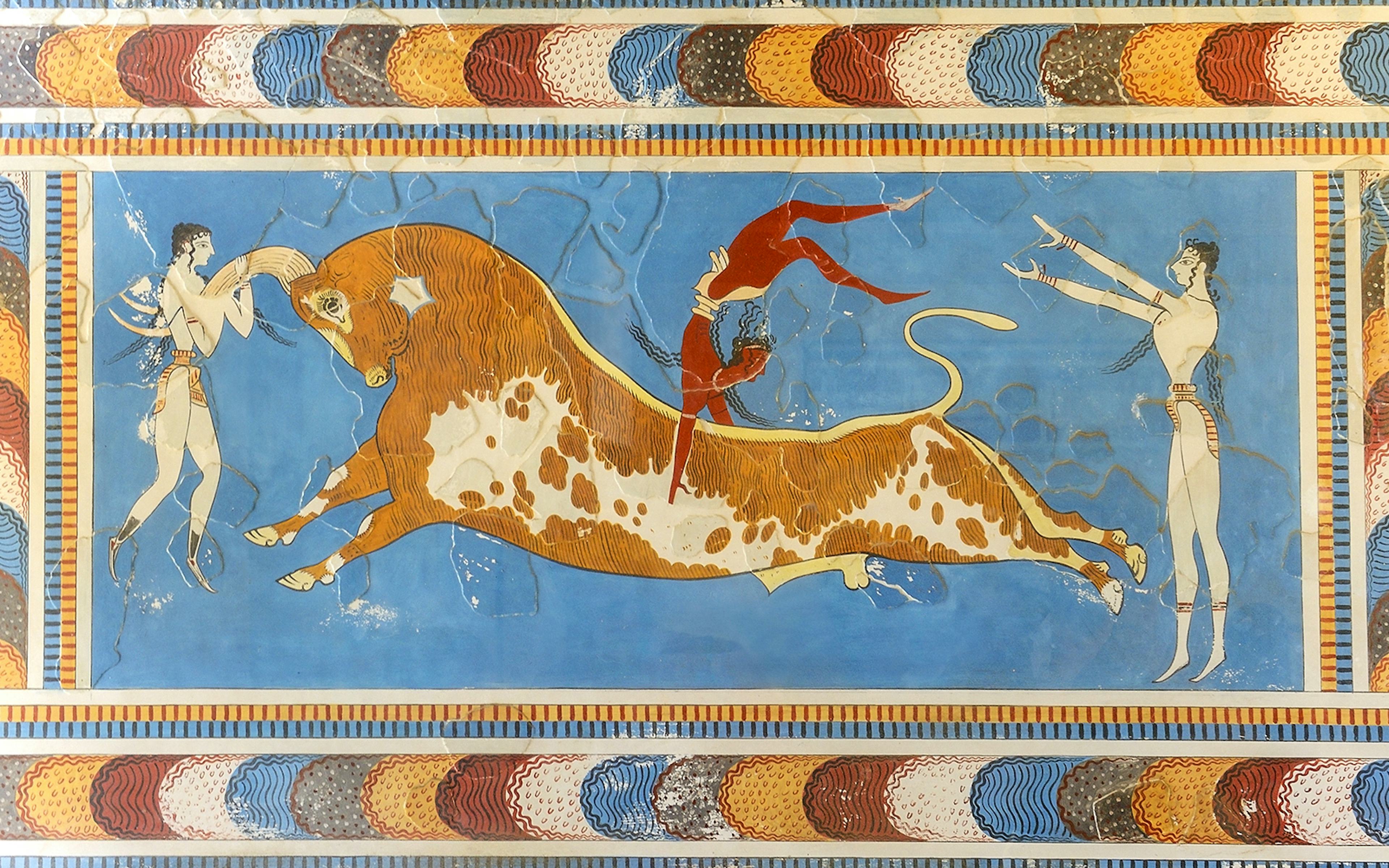
King Minos of Crete prayed to the sea god Poseidon, asking him for a sign to confirm his divine right to rule. Poseidon sent him a magnificent white bull, expecting Minos to sacrifice it in his honor. However, struck by the bull’s beauty, Minos chose to keep it and sacrificed a different bull instead. An angry Poseidon cursed his wife, Queen Pasiphae to fall in love with the bull, which led to Minotaur’s birth, a fearsome creature with the body of a man and the head of a bull.
The Labyrinth and human sacrifice
King Minos commissioned Daedalus, the greatest craftsman of his age, to design an inescapable labyrinth to imprison the Minotaur. The winding passageways were designed such that they not only contained the Minotaur but also prevented anyone from finding their way out. After the death of his son, Minos imposed a cruel punishment; every nine years (or annually, in some versions), Athens had to send seven young men and seven young women to be sacrificed to the Minotaur.
Theseus’ heroic mission
Theseus, the brave prince of Athens, joined the sacrificial troupe to free his people from this brutal obligation. Upon reaching Crete, he met Ariadne, the daughter of King Minos, who fell in love with him and decided to aid him in his quest. She provided Theseus with a ball of yarn to help him navigate the complex labyrinth.
The slaying of the Minotaur
Following Ariadne’s plan, Theseus tied one end of the thread near the entrance of the labyrinth and began his journey through its twisting passages. After a fierce and tense battle, Theseus managed to kill the beast, ending the terror that had plagued his people for years. He used ‘Adrianne’s thread’ to retrace his steps and also led the other Athenian youths out of the labyrinth, emerging as a hero who had conquered both the labyrinth and the creature within.
Aftermath and the symbolic legacy
Following his victory, Theseus fled Crete with Ariadne, but he later abandoned her on the island of Naxos. There, she was discovered by the god Dionysus, who made her his wife. The story of King Minos and the Minotaur is an integral part of the history of Knossos, symbolizing the courage to confront ‘monsters’ and the triumph of bravery over fear.
Frequently asked questions about the Knossos' modern history
The Palace of Knossos is also deeply intertwined with Greek mythology, particularly the legend of King Minos, the Minotaur, and the Labyrinth. According to the story, King Minos had commissioned the palace to be built like a labyrinth to imprison the Minotaur, a creature that was half-man, half-bull. However, the Minotaur was later killed by Theseus, the prince of Athens.
Sir Arthur Evans was a British archaeologist who excavated Knossos in the early 20th century. He studied the remains and undertook extensive restoration duties to spread awareness about the Minoan civilization. Evans reconstructed parts of the palace using concrete, a controversial decision that helped visualize the ancient site but sparked debate over the authenticity of such restorations in archaeology.
The discovery of the Knossos archaeological site offers valuable insights into the ancient Minoan civilization, including its administrative structure, and engineering advancements. The wall frescoes, religious symbols, and artifacts reveal a society with complex trade networks, a structured monarchy, and rich religious practices.
Nearly every wall of the Knossos Palace is adorned with vibrant frescoes, revealing intimate details about the Minoan way of life and their religious rituals. The Mother Goddess and the Bull, believed to be symbols of fertility and prosperity, are the two most prominent motifs, that appear in a majority of these paintings. Look out for the ‘Bull-Leaping’ fresco near the Central Court to delve deeper into their ceremonial practices.
The Labyrinth is almost synonymous with the Palace of Knossos, known for its complex network of rooms, courtyards, and passages. The palace’s maze-like design is also linked to the story of King Minos, who had once trapped the Minotaur inside these winding pathways. Today, the Labyrinth continues to be a popular name for Knossos, hinting at its roots in Greek mythology.
Having been built on an earthquake-prone section in Crete, the Knossos Palace suffered through several earthquakes and fires. These disasters often wreaked havoc on the structures and had to be rebuilt time and time again. The most significant disaster occurred around 1450 BCE, likely a massive earthquake or volcanic eruption, which led to the palace's decline. These events weakened the Minoan civilization, and Knossos ultimately fell to Mycenaean control, marking the end of its golden era.
As a major cultural and administrative center, Knossos played a vital role in the Minoan trade network across the Mediterranean. Its strategic location on Crete allowed it to interact with Egypt, the Levant, and other Aegean cultures. Archaeological finds, including pottery, seals, and frescoes show that Knossos was a thriving center for trade and culture in the ancient world.
More reads
About the Heraklion Palace of Knossos
Plan your visit to Knossos