Knossos Palace

Quick Information

RECOMMENDED DURATION

3 hours

VISITORS PER YEAR

1000000

EXPECTED WAIT TIME - STANDARD

30-60 mins (Peak), 0-30 mins (Off Peak)

EXPECTED WAIT TIME - SKIP THE LINE

0-30 mins (Peak), 0-30 mins (Off Peak)

Plan your visit

Did you know?

Knossos Palace is renowned as the place where Linear A writing originated. It is an ancient script that, intriguingly, remains only partially deciphered to this day.

Remarkably advanced for its time, Knossos Palace had an intricate plumbing system featuring clay pipes and drainage channels.

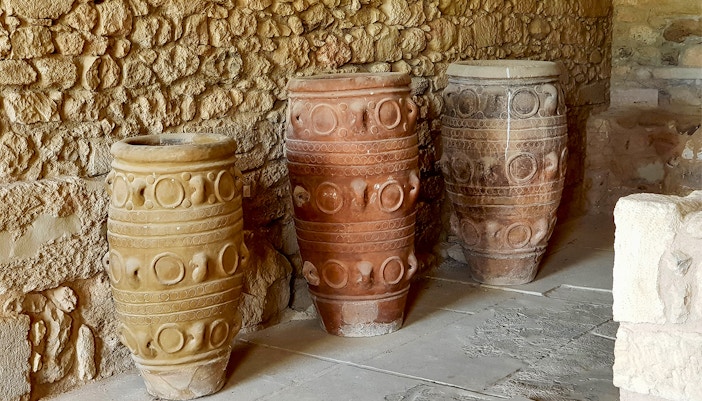
Minoan society held a deep appreciation for artistic expression, and Knossos was its grand canvas. Artisans showcased their exceptional craftsmanship and creativity through exquisite pottery, intricate jewelry, and stunning metalwork found within the palace grounds.

What to see inside the Knossos Palace?

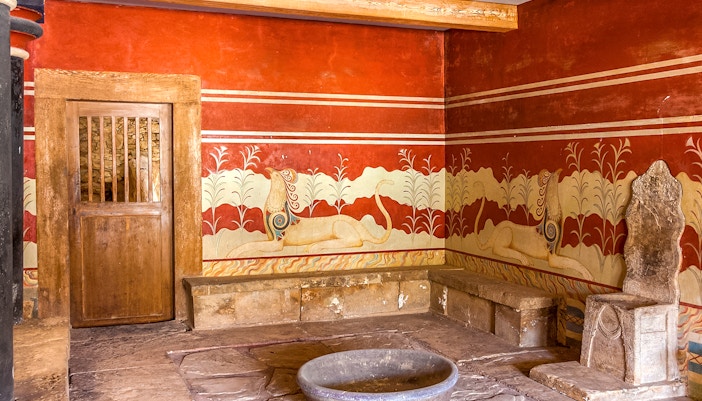
Throne Room

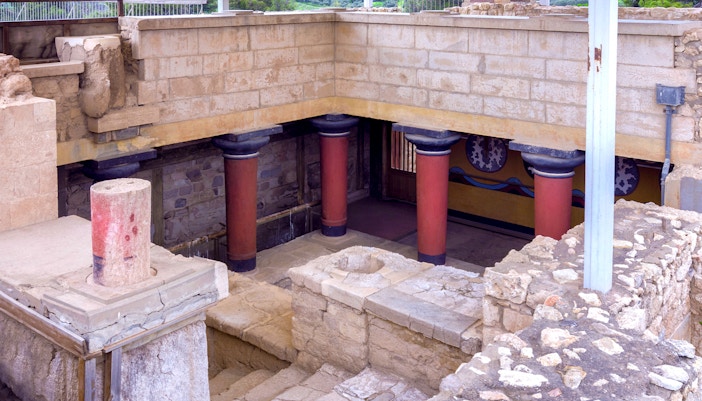
The Throne Room is one of the most well-preserved sections within the Minoan Palace. It has a large, circular, stone basin, which was most likely used for ritualistic purposes. Look out for the vivid frescoes of griffins, mythical creatures with the body of a lion and the head of an eagle, adding to the regal atmosphere of the room.

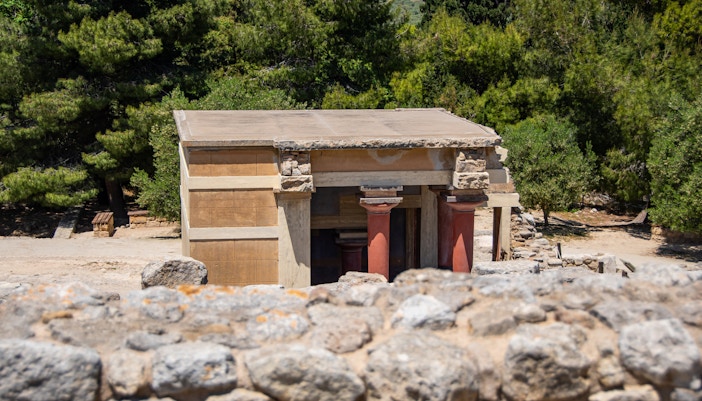
Western Propylaia

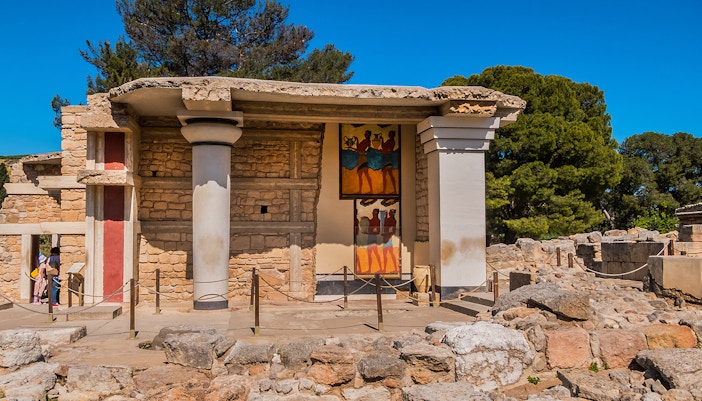
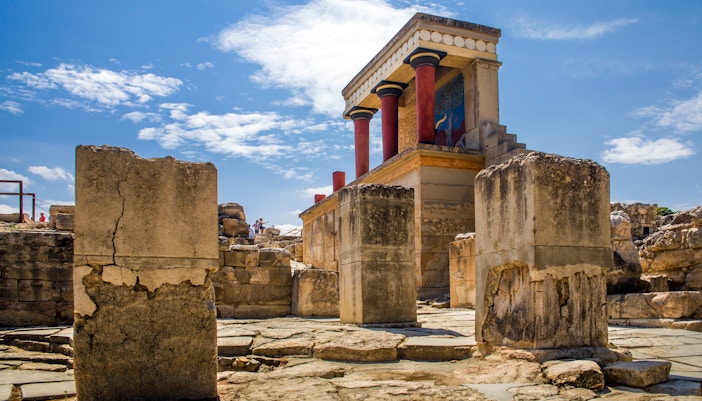
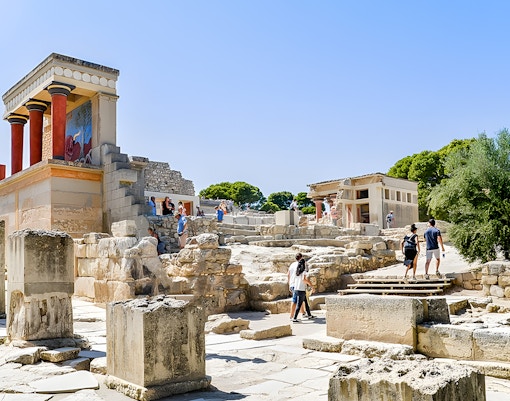
The Western Propylaia once functioned as an entrance to the Knossos Palace. At present, you will find remains of a monumental staircase and large blocks of columns, which once supported its roof. Its ‘Procession’ fresco depicts a series of figures carrying offerings towards the complex.

Grand Staircase

The Grand Staircase is one of the most complex designs within the Royal Palace of Knossos, highlighting the engineering prowess of the ancient Minoans. This multi-storied structure once consisted of four flights of stairs and led straight to the upper floors, where the Royal Apartments and administrative offices were located.

South Propylaia

The South Propylaia is another grand entrance, situated on the southern side of the Knossos archaeological site. The gate once comprised of large, fluted columns, and a wide staircase, only bits of which remain today. Most of the faded frescoes along its walls showcase the daily lifestyle and ritualistic practices of the Minoans.

Dead End Corridor

Also known as the Corridor of the House of the Chancel, this section comes to an abrupt end without seemingly leading anywhere, adding to the labyrinthine nature of the palace. Most of these walls are decorated with frescoes, depicting scenes from the daily life of the Minoans.

Vasiliki Odos ‘The Theater’

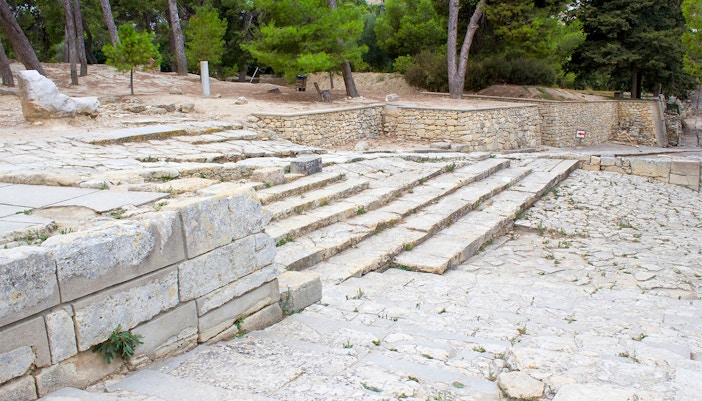
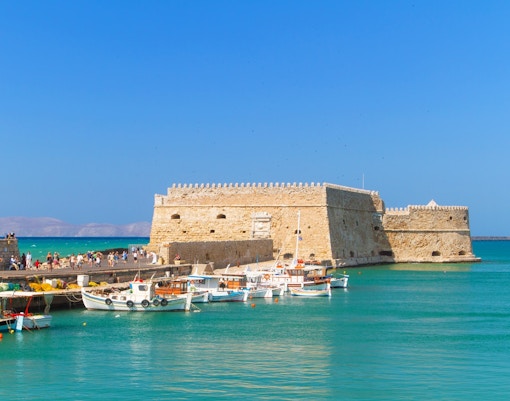
Vasiliki Odos is an open-air area, which was most likely used for public gatherings, ceremonial processions, or performances. It is now popular as a viewing point, from where you can see most of the Knossos archaeological site, the Koules Fortress, the Heraklion Venetian Walls, and even portions of the Phaistos Archaeological Site.

Corridor with the ‘Lily Prince’ Mural

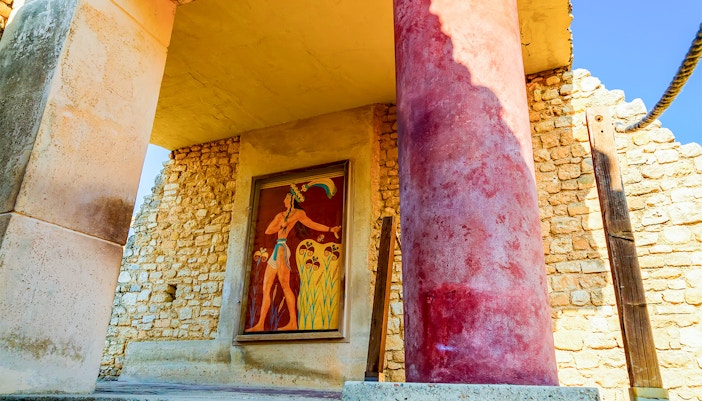
The south entrance corridor is a must-visit for its ‘Lily Prince’ mural, This artwork depicts a young man, adorned with lilies and a crown of flowers. It could be a portrait of a wealthy noble, an important religious figure, or a member of the Minoan royalty. The man’s vibrant attire and dynamic composition showcase the Minoan artistry and their emphasis on bright colors.

Hall of the Double Pelekae

The Hall of the Double Pelekae was once used as a ceremonial room. You will find the ‘double axe’ symbol in several frescoes and murals within the Knossos. This symbol was often associated with religious rituals. The hall is filled with remains of colorful frescoes, suggesting that it had once been richly decorated.

House of the Holy Step

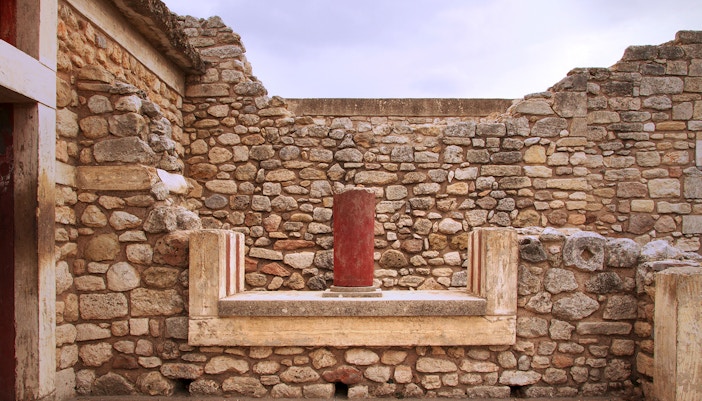
The House of the Holy Step is another section within the Minoan Palace of Knossos, which depicts the ‘double axe’ symbol and was believed to have hosted religious ceremonies. While the room does not have any specific frescoes, you will find raised platforms and altars.

What to see at the Knossos Palace archaeological site?

Small Palace of Knossos

Located near the main palace complex, this building features several rooms, lavishly decorated interiors, and advanced drainage systems. It possibly belonged to a high-ranking official or a member of the royal family.

Royal Tomb Sanctuary of Knossos

The Royal Tomb inside the Heraklion Palace of Knossos consists of a series of underground tombs, that belonged to the royal family. Look out for the artifacts inside these tombs, for they will help you make sense of their burial rituals and beliefs about the afterlife.

Minoan Guest House (Caravan Serai) Knossos

This structure includes multiple rooms and storage spaces used to house visitors, important dignitaries, and officials from neighboring areas. Such facilities indicate that the Minoans were extremely hospitable and tolerant towards other cultures.

House of the High Priest of Knossos

The House of the High Priest of Knossos, as its name suggests, was the residence of an important religious official of the Minoan race. You can step inside the building’s several rooms and look at the raised platforms, which were possibly used for sacred purposes.

Minoan Viaduct

The Minoan Viaduct is spread across the entire Knossos archaeological site and was used to transport water across the landscape. Their remains reflect the engineering prowess and resourcefulness of ancient Minoans to use their water resources effectively.

Sanctuary in the Wind Caves

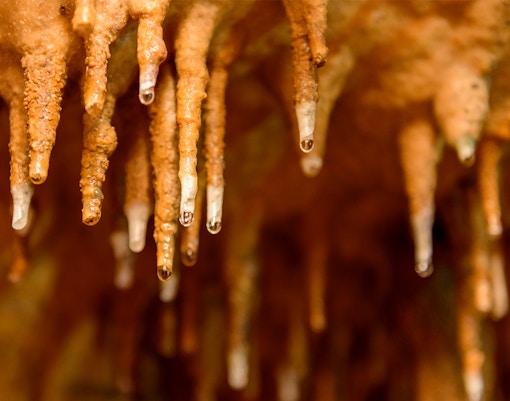
A few kilometers away from the Knossos Royal Palace, this sanctuary comprises a series of natural caves and altars. These natural platforms suggest that ancient Minoans preferred to integrate nature into their spiritual rituals.

Minoan Mansion of Nirou Hani

This Minoan Mansion of Nirou Hani, featuring several rooms and intricate decorations, likely belonged to a powerful administrative official or someone from an influential family. These rooms and their objects will give you an idea of how Minoan elites went about their lives.

Venetian Walls of Heraklion

These walls are defensive fortifications built by the Venetians in the 16th century to protect Knossos from Ottoman invasions. You can walk along these walls, visit its colossal gates like the New Gate and the Pantokrator Gate, and enjoy views of the city from its multiple vantage points.

History of the Heraklion Palace of Knossos

  • 1900 BC to 1700 BC: The initial construction of the Royal Palace of Knossos begins during the First Palace period of the Minoan civilization. 
  • 1700 BC: The palace is destroyed due to a fire outbreak or other natural causes. Another palace, similar to the previous Knossos Palace structure, is built on the same site with numerous frescoes. 
  • 1450 BC: The Knossos archaeological site sustains significant damages due to earthquakes, the eruption of Thera, and interference with the Myceneans from the mainland. 
  • 1380 BC: The palace is abandoned, possibly due to increased conflicts with the Myceneans from mainland Greece. 
  • 1878: Cretan archaeologist Minos Kalokairinos identifies the site of Knossos. 
  • 1900 to 1935: Sir Arthur Evans, a British archaeologist, conducts extensive excavations to uncover the Knossos archaeological site. He also reconstructs parts of the palace with modern elements to give visitors an idea about how the Minoans conducted their daily activities.

Plan your visit to the Royal Palace of Knossos

Who built the ancient Palace of Knossos?

The Heraklion Palace of Knossos was built by the Minoans, a civilization that flourished in ancient Crete in around 1900 BC. The Minoans were one of the most advanced and settled communities in Europe, known for their advanced drainage systems and colorful frescoes. It is not known which exact individuals built the Royal Palace, however, it can be surmised that several workers, architects, and engineers were involved in the construction process.

Knossos Palace architecture

Knossos Palace architecture

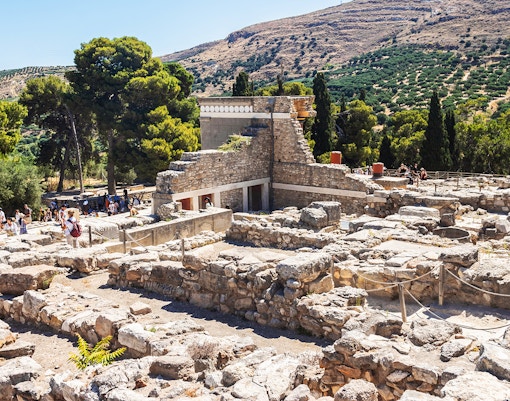
The architecture of the Knossos Palace is a testament to the engineering genius of ancient Minoans. The palace construction was completed around 1900 BC and was almost rebuilt again after an earthquake around 1700 BC.

  • The Royal Palace of Knossos is built around a central courtyard, which once served as the center for all administrative and religious activities. 
  • The palace has numerous rooms and passages spread across four floors, making for a labyrinthine structure, which has often been referenced in the Minotaur’s legend. 
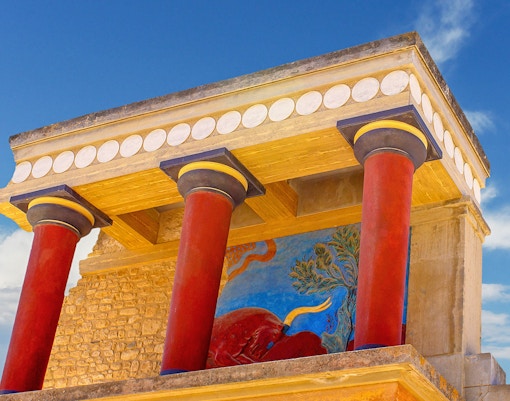
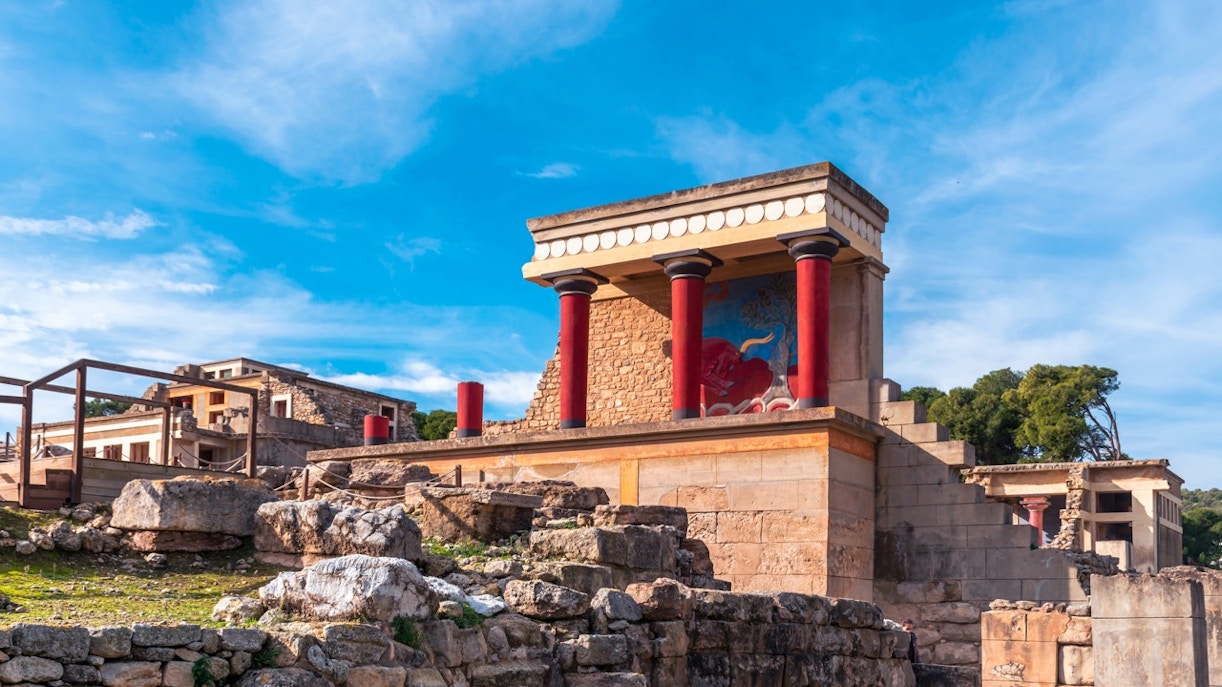
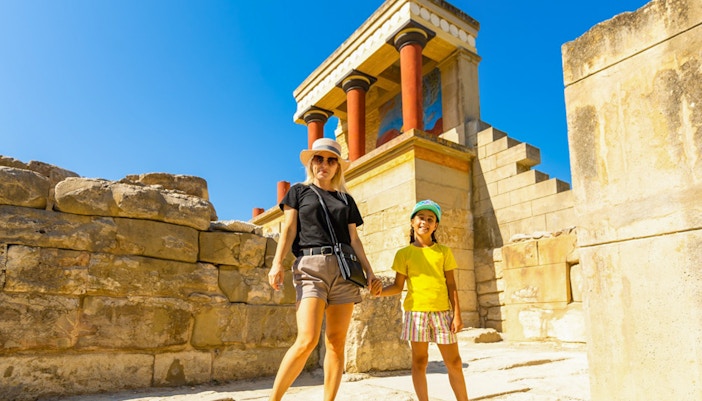
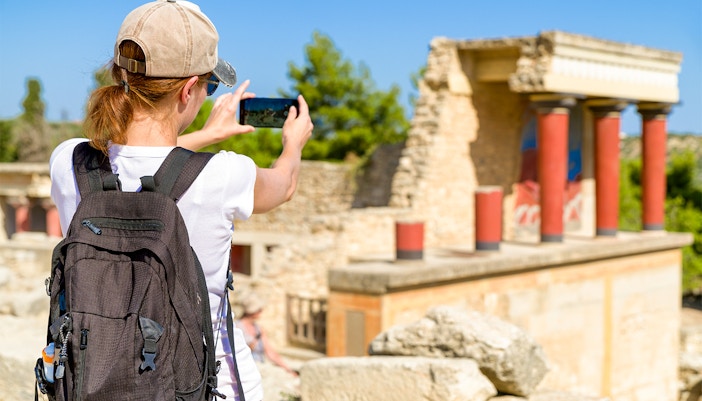
  • Unlike the traditional Greek columns of the Classical period, the Minoan Palace columns are typically wider at the top and narrower at the bottom, These columns were originally built from wood and later reconstructed in stone. 
  • Clay pipes and channels were used for effective drainage within the Royal Palace. Their bathrooms also had a mechanism similar to a modern-day flush, indicating that the Minoans were adept at innovation and had a high knowledge of engineering. 
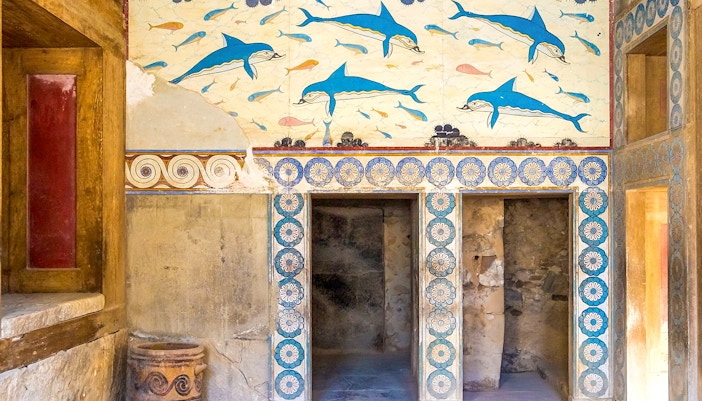
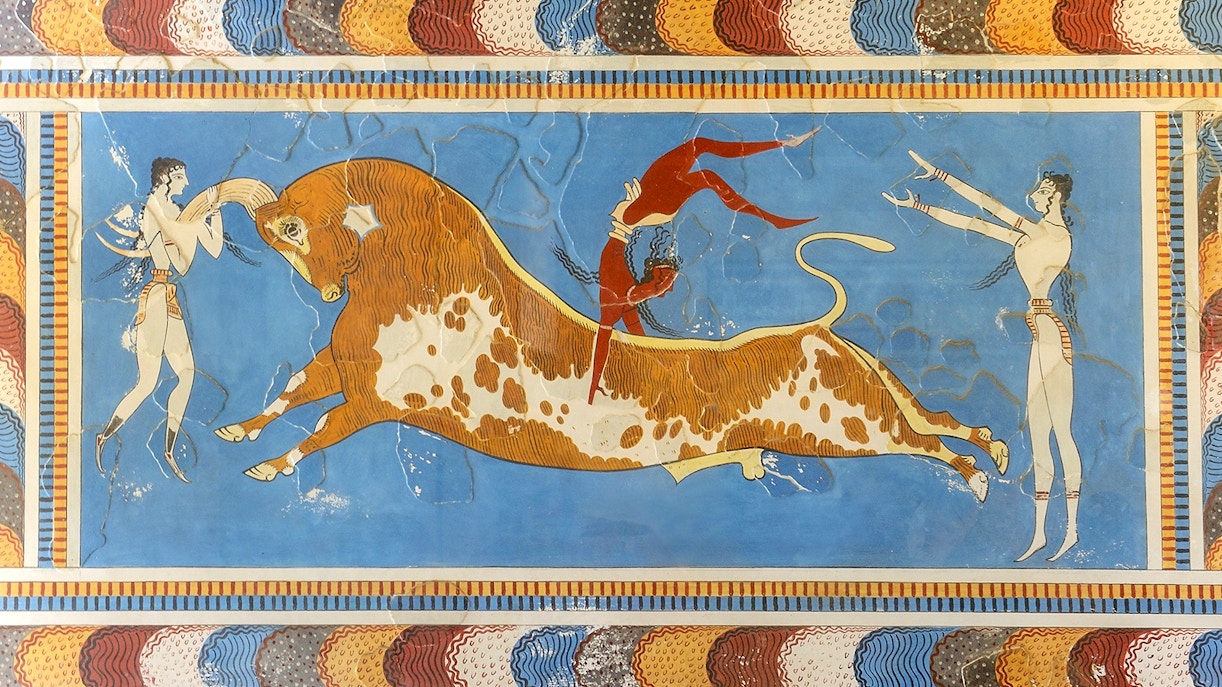
  • The walls of the Minoan Palace are adorned with vibrant frescoes, depicting the surrounding scenic landscapes and scenes from their daily life and religious ceremonies.

Steeped in mythology | Theseus and the Minotaur

Steeped in mythology | Theseus and the Minotaur

The Heraklion Palace of Knossos has been referenced in several myths and legends. One of its most famous instances is the myth of King Theseus and the Minotaur in Greek mythology. It is said that King Minos had ordered for a labyrinth to be constructed beneath the castle to house a half-man and half-bull, called the Minotaur. King Theseus of Athens had volunteered to slay the creature and win the king’s favor. With the help of Minos’ daughter, Ariadne, who gave him a ball of thread to navigate the labyrinth, Theseus defeated the Minotaur.

Besides mythology, the Royal Palace of Knossos has also made a lasting impression on popular culture. In the ‘Assasins Creed’ video game, players can experience a realistic simulation of the Knossos Palace and its labyrinth. The game incorporates the mythical legend of the Minotaur and includes a quest where the player has to come face-to-face with the creature.

Frequently asked questions about the Heraklion Palace of Knossos

The Heraklion Palace of Knossos is a cornerstone of the Minoan civilization, which thrived in Crete around 1900 BC. The Minoans were renowned for their advanced drainage systems, writing script, and artistry. The Royal Palace itself is enormous and has multiple stories, grand staircases, and a Central Court for administrative purposes. The wall frescoes offer a closer look at the Minoan rituals, clothing, art styles, and beliefs about the afterlife.

More reads

Plan your visit to the Knossos Palace

Inside the Minoan Palace of Knossos

Knossos Palace opening hours